Summary
- Bland AI is a developer-first platform. It gives technical teams giant control over call flows, but the setup, pricing, and ongoing tuning all depend on having engineers in-house.
- The most common reason teams seek alternatives is unpredictable billing. Per-minute rates, outbound minimums, transfer fees, and SMS charges stack up faster than most operators expect, especially at high call volumes.
- For outbound call centers in regulated industries, the better fit is usually a managed platform. Insurance, mortgage, solar, debt relief, and similar verticals need TCPA enforcement, number health management, and warm transfer routing as part of the service, not as your team’s homework.
- Bigly Sales, Retell AI, Synthflow, and CallBotics are the four most named alternatives in 2026. Each one fits a different buyer.
- The right alternative depends on three things: how much engineering you have, how regulated your industry is, and how predictable you need your monthly bill to be.
If you have spent any time evaluating AI calling platforms for outbound, you have run into Bland AI. They have one of the loudest brands in the space, and for good reason. The platform gives developers deep control over voice agents. You can clone voices, route calls programmatically, build complex pathways, and integrate with anything that has an API.
But control comes with a cost, and not just the financial kind. Operators who deployed Bland AI at scale through 2025 have started to talk openly about the trade-offs: pricing that is difficult to forecast, billing components that stack in unexpected ways, and a platform that needs a developer in the loop for almost everything.
If you are a call center manager, agency owner, or sales director who started on Bland AI and is now looking for something different, this post is for you. We will cover what Bland AI actually does well, where it falls short for outbound call center use cases, and the four alternatives that operators most often named in 2026.
This will be honest. Bland AI is not a mediocre platform. It is just not the right platform for every buyer.
What Bland AI Actually Does Well
Bland AI is a programmable voice platform built for developers who want extreme control over how AI voice agents behave.
That sentence covers most of what makes Bland AI strong and also most of what makes it a poor fit for non-technical operators.
The strengths are real. The voice quality is competitive with the rest of the market. The Pathways feature lets engineering teams build sophisticated call flows that branch based on conversation outcomes. The webhook architecture means every call event can trigger custom logic in your CRM, your data pipeline, or any other system you want. Voice cloning works from a short audio clip, which is useful if you want a custom-branded voice for your campaigns. And the platform supports SOC 2, HIPAA, and GDPR compliance, which is relevant for regulated buyers.
If you are a developer building outbound automation as a product, or you have an engineering team that can own a voice platform internally, Bland AI does what it promises.
Where Bland AI Falls Short for Outbound Call Centers
For high-volume outbound operations in regulated industries, three issues arise most often.
Pricing Is Hard to Predict
Bland AI’s billing has multiple layers. According to publicly documented rates, the per-minute cost runs around $0.09 for connected calls. Outbound attempts under 10 seconds carry a $0.015 minimum charge. Transfers add another fee, typically around $0.025 per minute. SMS messages cost $0.02 each, billed in both directions. Voicemails are billed at the same per-minute rate as connected calls.
For low-volume use cases, this pricing stacks up to a manageable bill. When an outbound operation handles thousands of calls each day, forecasting the layers becomes more challenging. A 10,000-minute month at $0.09 per minute is $900, but most operations also pay for failed calls, transfers, SMS, and any voicemail drops that are charged. Real-world monthly spend often comes in 30 to 60 percent higher than the simple per-minute math suggests.
The platform tiers (Build at $299 per month and Scale at $499 per month) include subscription fees that unlock lower per-minute rates, but the call minutes themselves are still billed on top of the subscription. Multiple reviews note that this layered model makes accurate budgeting difficult for teams managing tight margins.
The Platform Requires Engineering to Run
Bland AI is API-first. To get the most out of the platform, you need someone on your team who can write code, manage webhooks, debug call flows, and tune pathways based on production data.
For technical teams, this capability is a feature. For most call center operators, the wall is a barrier. Operations that bought Bland AI thinking they could deploy it without engineering support often find themselves in one of two situations: paying a contractor to maintain the platform, or watching their AI agents underperform because nobody internally can tune them.
Compliance Is Your Responsibility
Bland AI provides infrastructure that supports compliance, but it does not enforce specific TCPA rule on your behalf. Consent verification per call, state-specific dialing windows, DNC list suppression, disclosure language, and number reputation monitoring are all things your team has to build and maintain on the platform.
For a regulated outbound operation, this is significant work. It is also where most TCPA violations happen, because manual tracking at scale tends to break down under pressure. A call center running 50,000 outbound dials a month cannot afford to have a junior team member double-checking compliance on every call.
The Four Most-Named Bland AI Alternatives in 2026
Operators seeking alternatives to Bland AI in 2026 typically end up evaluating four platforms. Each one fits a different buyer.
1. Bigly Sales
Bigly Sales is a fully managed AI calling platform built specifically for high-volume outbound operations in regulated industries.
Where Bland AI hands you the building blocks and expects you to assemble them, Bigly Sales runs the deployment as a service. That includes script development, TCPA enforcement on every call, number registration and rotation, carrier reputation monitoring, warm transfer routing to your closers, and ongoing campaign optimization.
The fit is specific. Bigly Sales helps operators in insurance, mortgage, solar, debt relief, real estate, staffing, final expense, and legal services. These are verticals with high call volumes, heavy regulatory environments, and qualification-heavy sales processes where compliance and number health are not optional.
Pricing is structured around managed service tiers rather than usage stacking, which makes monthly costs more predictable. For non-technical teams running regulated outbound, Bigly Sales is the closest functional alternative to Bland AI in 2026, with the trade-off being less developer-level customization in exchange for managed delivery.
You can read more about how the system works on the Bigly Sales pillar post on AI voice agents for outbound call centers and the related guide on human-AI collaboration in 2026.
2. Retell AI
Retell AI is the most-cited Bland AI alternative for teams that prioritize voice quality and lower latency.
Retell positions itself directly against Bland AI in marketing and search, and the technical comparison is similar. Both platforms target developer-led teams. Retell tends to be praised for its natural-sounding voice with less of the awkward pause-between-turns problem that some Bland AI users report.
The trade-offs are real. Retell’s strength is inbound voice quality, which makes it a better fit for AI receptionist or inbound support use cases than for high-volume outbound campaigns. It also remains a developer-led platform, so the same engineering dependency applies as with Bland AI.
For outbound-heavy regulated call centers, Retell is usually not the right fit. For inbound-first teams with engineering resources, it is worth evaluating.
3. Synthflow
Synthflow is the most-named no-code alternative to Bland AI, designed for SMB and agency white-label use cases.
Synthflow has built a visual workflow builder that lets non-technical operators design call flows without writing code. The platform reportedly handles around 5 million calls per month and offers white-label options for agencies that want to resell AI calling under their own brand.
The trade-offs are significant for outbound regulated buyers. Synthflow’s outbound dialer and campaign management capabilities lag dedicated outbound platforms. HIPAA compliance requires a Business Associate Agreement add-on that typically carries a 30 percent premium. And the platform is optimized for SMB inbound rather than enterprise outbound.
For agencies serving SMB clients with primarily inbound use cases, Synthflow is a strong choice. For high-volume outbound in regulated industries, it is usually not the right tool.
Read more on Retell AI vs Synthflow.
4. CallBotics
CallBotics is positioned as an enterprise-ready alternative with predictable agent-based pricing.
CallBotics has built itself around 18 years of contact center operations experience, with pricing structured per agent within fixed tiers rather than per minute. This makes monthly costs predictable, which addresses the biggest complaint operators have about Bland AI.
The fit is enterprise. CallBotics targets large contact center operations with structured deployment timelines and dedicated implementation support. For mid-sized operations or agency owners, the pricing tier may be higher than the use case justifies. For enterprise call centers that need predictable billing and structured implementation, CallBotics is a serious option.
How to Choose the Right Alternative
The right Bland AI alternative depends on three questions about your operation.
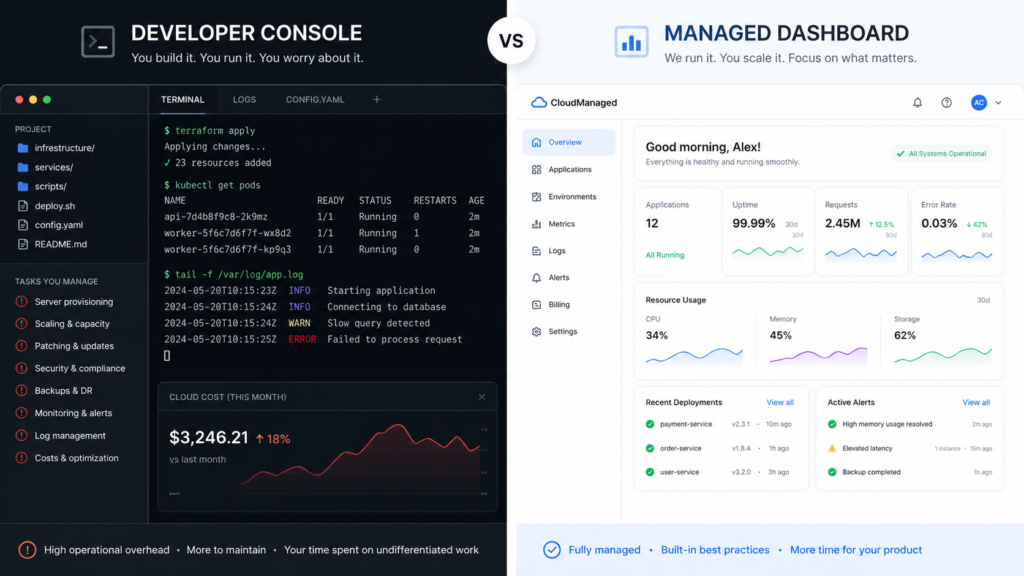
- How much engineering do you have? If the answer is a dedicated team, Bland AI or Retell AI both work. If the answer is one or two technical people stretched across multiple priorities, a managed platform like Bigly Sales saves you the maintenance burden. If you have no engineering at all, Synthflow or Bigly are your two main options depending on whether you are inbound- or outbound-focused.
- How regulated is your industry? If you operate in insurance, mortgage, solar, debt relief, or any vertical with heavy TCPA exposure, the cost of a compliance failure is too high to manage manually on a self-serve platform. A managed platform that enforces compliance automatically is usually the right call. If you are running unregulated B2B prospecting, the compliance burden is lower and the developer platforms become more viable.
- How predictable do you need your monthly bill to be? Per-minute pricing models work well for pilots and unpredictable call volumes. They become harder to manage as your operation scales. If you need to forecast monthly spend within 5 to 10 percent for budgeting purposes, a tiered or managed pricing model from Bigly Sales or CallBotics is going to serve you better than Bland AI’s stacked usage model.
When Bland AI Is Still the Right Choice
Bland AI is the right platform when you have a technical team, an unregulated use case, and the appetite to build custom voice automation.
This is not a small market. There are real businesses that benefit from Bland AI’s flexibility, and operators who have engineering depth and want to build differentiated voice products on top of a programmable platform should not switch just because a competitor has nicer marketing.
The honest read is this. Bland AI is a strong platform for the right buyer. For high-volume regulated outbound call centers without dedicated engineering, the right buyer is usually somebody else.
What to Do Next
If you started on Bland AI and you are running into the issues this post described, you have three reasonable paths.
- Path 1: Add engineering capacity and stay with Bland AI. This option works if you have a budget for a dedicated voice engineer or contractor and if your use case justifies the customization.
- Path 2: Evaluate a managed alternative. Bigly Sales, CallBotics, or a similar managed platform will handle the compliance, number health, and ongoing tuning that Bland AI leaves to you. Most regulated outbound operations land here.
- Path 3: Move to a no-code platform like Synthflow if your use case is primarily inbound or SMB-focused.
If you want to talk through what fits your operation, the team at Bigly Sales runs free consultations specifically for operators evaluating their next AI calling platform. No pressure, no demo theater. Just an operator-to-operator conversation about what is working and what is not.
Frequently Asked Questions
What is the main reason teams switch from Bland AI?
Two reasons come up most. First, the pricing is hard to predict because it stacks per-minute charges, outbound attempt minimums, transfer fees, SMS costs, and add-ons. Second, the platform is built for developer teams, so non-technical operators struggle to maintain it once it is live.
Is Bland AI good for outbound call centers?
It can be, if you have an engineering team. Bland AI gives technical operators deep control over call flows and integrations. For high-volume regulated outbound operations without dedicated engineering resources, a managed platform is usually a better fit because compliance and number health are handled for you.
What does Bland AI actually cost in 2026?
According to public pricing, Bland AI runs about $0.09 per minute for connected calls on enterprise plans, with a $0.015 minimum per outbound attempt and $0.02 per SMS. The platform tiers (Start, Build at $299/month, and Scale at $499/month) include some calling capacity but most teams pay additional usage on top. Failed calls and transfers carry their own charges.
Is Bigly Sales a real Bland AI alternative?
Yes, but for a different buyer. Bigly Sales is a fully managed AI calling platform built for high-volume outbound call centers in regulated industries. Where Bland AI hands you the building blocks, Bigly handles compliance, number health, script optimization, and warm transfer routing as part of the service.
What is the best Bland AI alternative for non-technical teams?
For most non-technical teams running outbound in regulated industries, a managed platform like Bigly Sales is the closest fit. For SMB inbound use cases or teams that want more visual workflow building, Synthflow and Retell AI are also worth evaluating.
Does Bland AI handle TCPA compliance?
Bland AI provides the infrastructure for compliance, including SOC 2 Type II, GDPR, and HIPAA support. However, enforcing TCPA rules on every outbound call (consent verification, dialing windows, DNC suppression, disclosure language) is the operator’s responsibility on the platform. Managed alternatives typically handle this enforcement automatically.